What Does the Nissan 5 Year Warranty Actually Cover?
What Nissan's 5-Year Warranty Covers in the U.S.
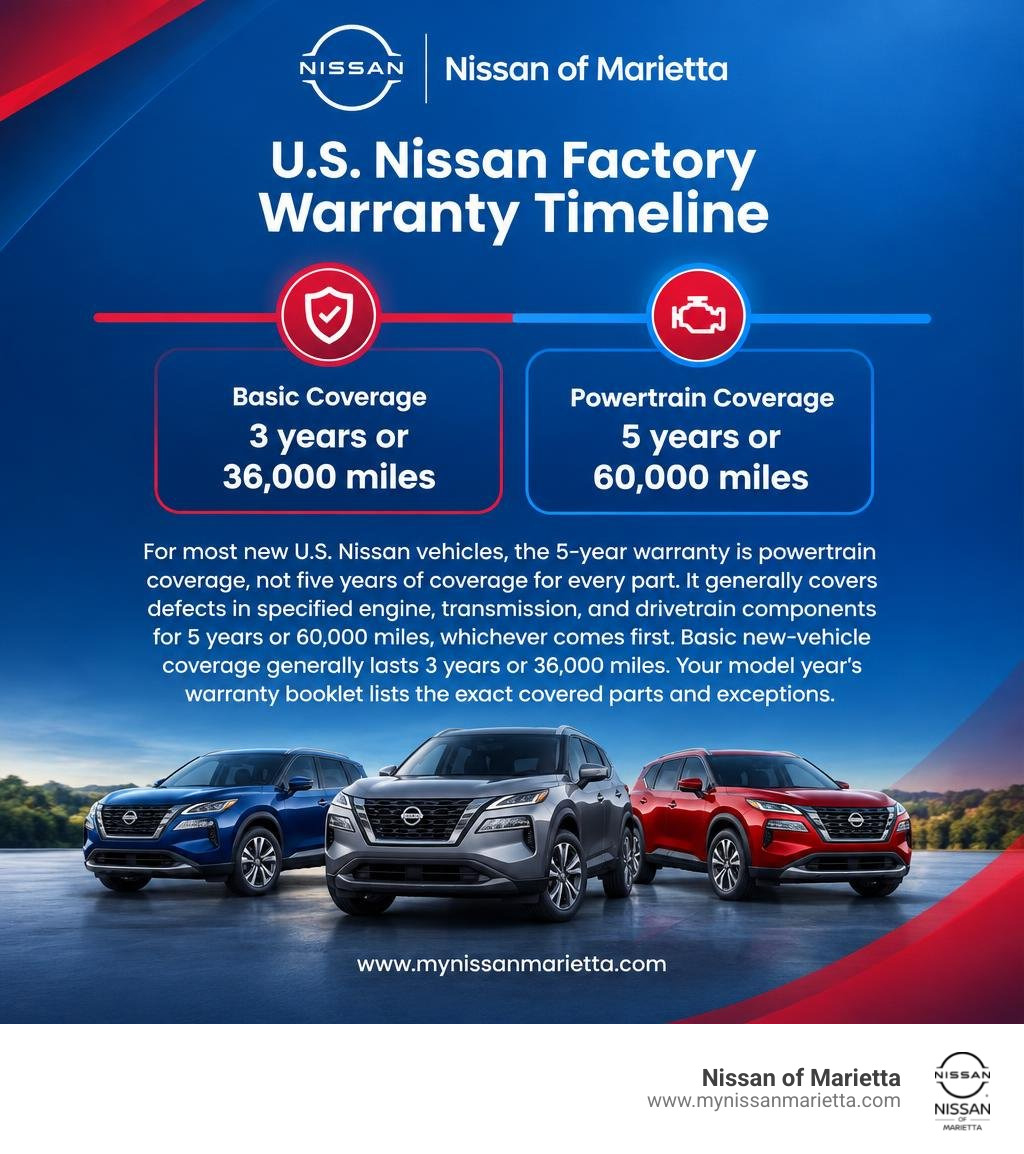
For most new U.S. Nissan vehicles, the 5-year warranty is powertrain coverage, not five years of coverage for every part. It generally covers defects in specified engine, transmission, and drivetrain components for 5 years or 60,000 miles, whichever comes first. Basic new-vehicle coverage generally lasts 3 years or 36,000 miles. Your model year's warranty booklet lists the exact covered parts and exceptions.
That difference matters whether you drive across Cobb County for work or use your Nissan for school activities. I'm Vaughn Smith, Marketing Director for Smith Automotive Group, where my work with metro Atlanta Nissan dealerships includes helping owners navigate vehicle information. A search for nissan 5 year warranty can bring up plans from other countries, so this guide focuses on what U.S. owners should check.
Disclaimer: This guide is provided for informational purposes only. Vehicle maintenance, diagnosis, modifications, and repairs should only be performed by a certified Nissan technician. Always consult Nissan of Marietta's service department and your official vehicle owner's manual and warranty information booklet before conducting any repairs or servicing.
Understanding the Nissan 5 Year Warranty and Powertrain Protection
When you drive home in a vehicle from the new Nissan lineup, it is backed by factory warranty protection divided into clear categories. The 5-year coverage period specifically focuses on the core mechanical assemblies that generate power and deliver it to the road: the engine, the transmission or transaxle, and the drivetrain.
The basic bumper-to-bumper warranty lasts for 3 years or 36,000 miles, covering electrical accessories, infotainment systems, climate controls, and cabin hardware against defects in factory materials or workmanship. In contrast, the powertrain warranty extends protection for major mechanical components up to 5 years or 60,000 miles, whichever comes first.
| Coverage Type | Duration | Mileage Limit | Core Assemblies Covered |
|---|---|---|---|
| Basic Coverage | 3 Years | 36,000 Miles | Comprehensive vehicle systems, electronics, cabin features |
| Powertrain Coverage | 5 Years | 60,000 Miles | Engine, transmission, transaxle, drivetrain assemblies |
| Corrosion Perforation | 5 Years | Unlimited Miles | Sheet metal rust-through from factory defects |
Understanding this split helps you plan your long-term ownership costs whether you are commuting daily on I-75 through Marietta and Smyrna or managing family activities around Kennesaw.
What Is Covered Under the Nissan 5 Year Warranty
The factory powertrain warranty covers internal parts and key structural housings from factory defect or unexpected mechanical breakdown under normal operating conditions.
Examples of components that may be covered under the applicable warranty include:
- Engine Assembly: Cylinder block, cylinder heads, internal rotating assemblies (pistons, crankshaft, connecting rods), camshafts, valve train components, oil pump, water pump, timing chain and gears, intake manifold, exhaust manifold, and factory engine seals and gaskets.
- Transmission and Transaxle: Transmission case, internal gears, torque converter, transfer case, electronic transmission control module, internal solenoids, and related gaskets.
- Drivetrain Systems: Drive shafts, universal joints, constant velocity joints, front and rear axle housings, differential gears, internal bearings, and wheel bearings.
Because individual component definitions can vary across model years and hybrid powertrains, you should always confirm coverage details in your vehicle-specific warranty booklet.
How to Tell Whether a Repair May Be Covered
A powertrain warranty does not mean every concern involving the engine or transmission is automatically covered. Coverage generally depends on the failed part, the cause of the failure, the vehicle's age and mileage, and the exclusions in the applicable warranty booklet. For example, a defect in a covered internal component may be eligible, while a repair caused by collision damage, neglected maintenance, or an aftermarket modification may not be.
Before authorizing repairs, bring the vehicle to Nissan of Marietta's Service Department with your vehicle identification number, current mileage, maintenance records, and a clear description of the concern. A certified technician can diagnose the issue and confirm whether the affected component and repair circumstances fall within the applicable factory coverage. The warranty booklet for the vehicle's model year remains the controlling source for coverage decisions, and a dealership can explain how its terms apply to the diagnosed condition.
Key Exclusions in the Nissan 5 Year Warranty
While powertrain coverage protects against manufacturer defects in major assemblies, it does not cover normal wear, tear, or improper care.
Key exclusions include:
- Routine Maintenance and Consumables: Engine oil, transmission fluid, coolant, spark plugs, filters, brake pads, rotors, and wiper blades.
- Improper Maintenance: Damage caused by failing to perform scheduled service, using incorrect fuel or non-approved fluids, or continuing to operate a vehicle after a warning light appears.
- Environmental and External Damage: Hail damage, road debris strikes, flood damage, stone chips, chemical fallout, theft, and collision impact.
- Modifications and Misuse: Unauthorized aftermarket engine tuning, improper towing beyond vehicle capacities, racing, or installation of non-genuine components that cause mechanical stress.
Electric Vehicle and Hybrid Component Protection
Modern electrified powertrains rely on distinct electrical architecture alongside traditional drivetrain components. Nissan provides dedicated factory warranty coverage for high-voltage systems in fully electric models like the LEAF and Ariya.
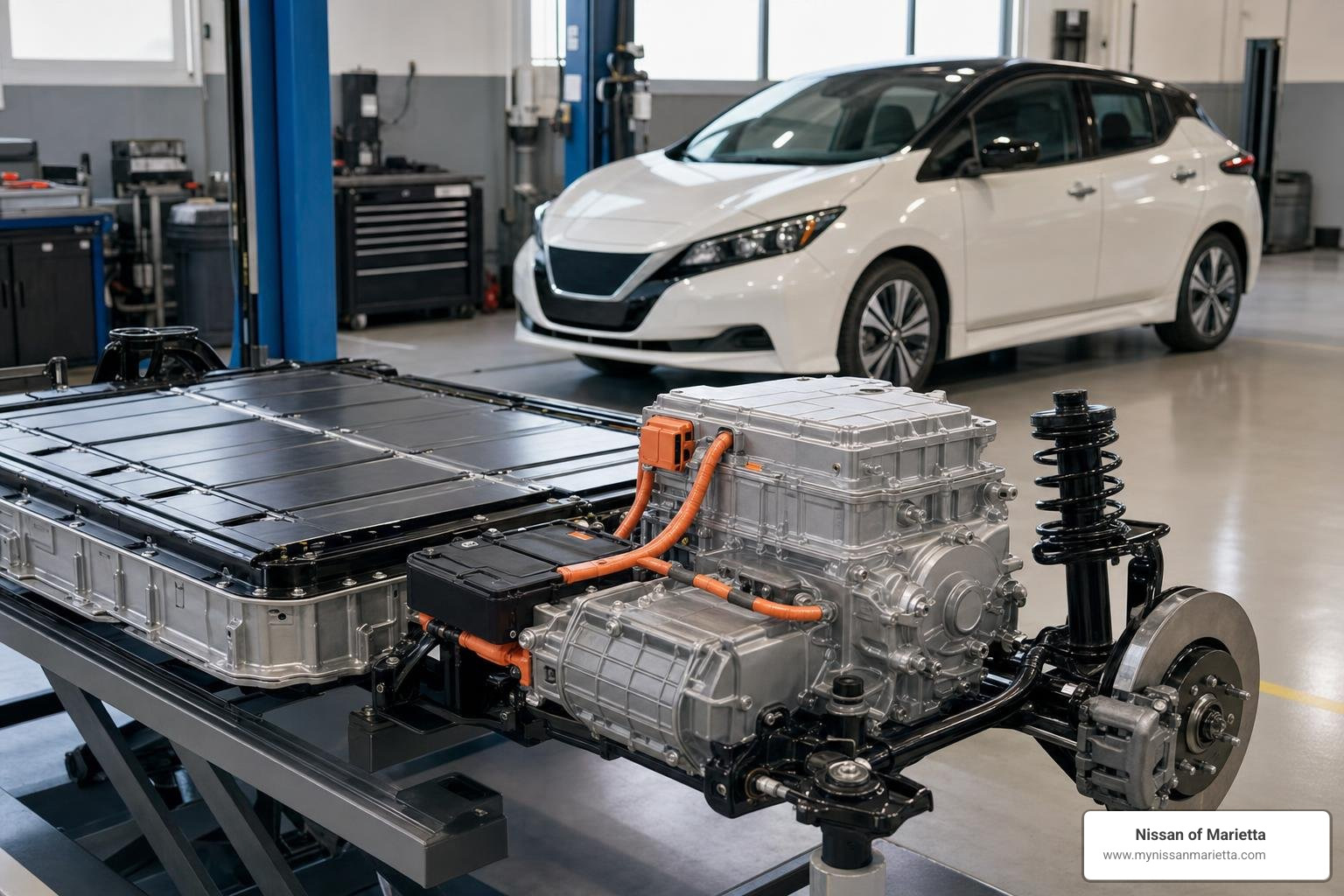
Electrified powertrain components, including the traction motor, power inverter, and power management control module, receive dedicated warranty coverage up to 5 years or 60,000 miles.
High-voltage lithium-ion battery packs receive extended protection. Nissan covers battery operational defects and materials for 8 years or 100,000 miles. For models like the LEAF, a State of Health capacity guarantee protects against battery capacity loss below 9 out of 12 display bars for up to 8 years or 100,000 miles (or 160,000 km in select metric programs), whichever comes first. You can check current terms via official U.S. Nissan warranty information.
Why Model Year and Vehicle Type Matter
Warranty language is not identical for every Nissan model, model year, or powertrain. Gasoline vehicles, hybrids, battery-electric vehicles, and vehicles used in commercial service can have different coverage categories or additional terms. A hybrid or electric vehicle may have separate protections for high-voltage components and the battery, while the standard powertrain coverage still applies only to the components identified in its warranty booklet.
For that reason, avoid relying only on a general warranty summary when you need an answer about a specific repair. Use the vehicle identification number and the warranty booklet for the exact model year, then ask Nissan of Marietta's Service Department to help interpret the applicable coverage. This approach is especially useful when buying a pre-owned Nissan, because the remaining coverage depends on its original in-service date, accumulated mileage, vehicle history, and program eligibility.
U.S. Warranty Terms, Mileage Limits, and Commercial Usage Rules
Standard U.S. market factory coverage operates on strict time-or-mileage boundaries. Your coverage remains active until you reach either the designated calendar time from the original in-service date or the total odometer mileage limit, whichever milestone arrives first.
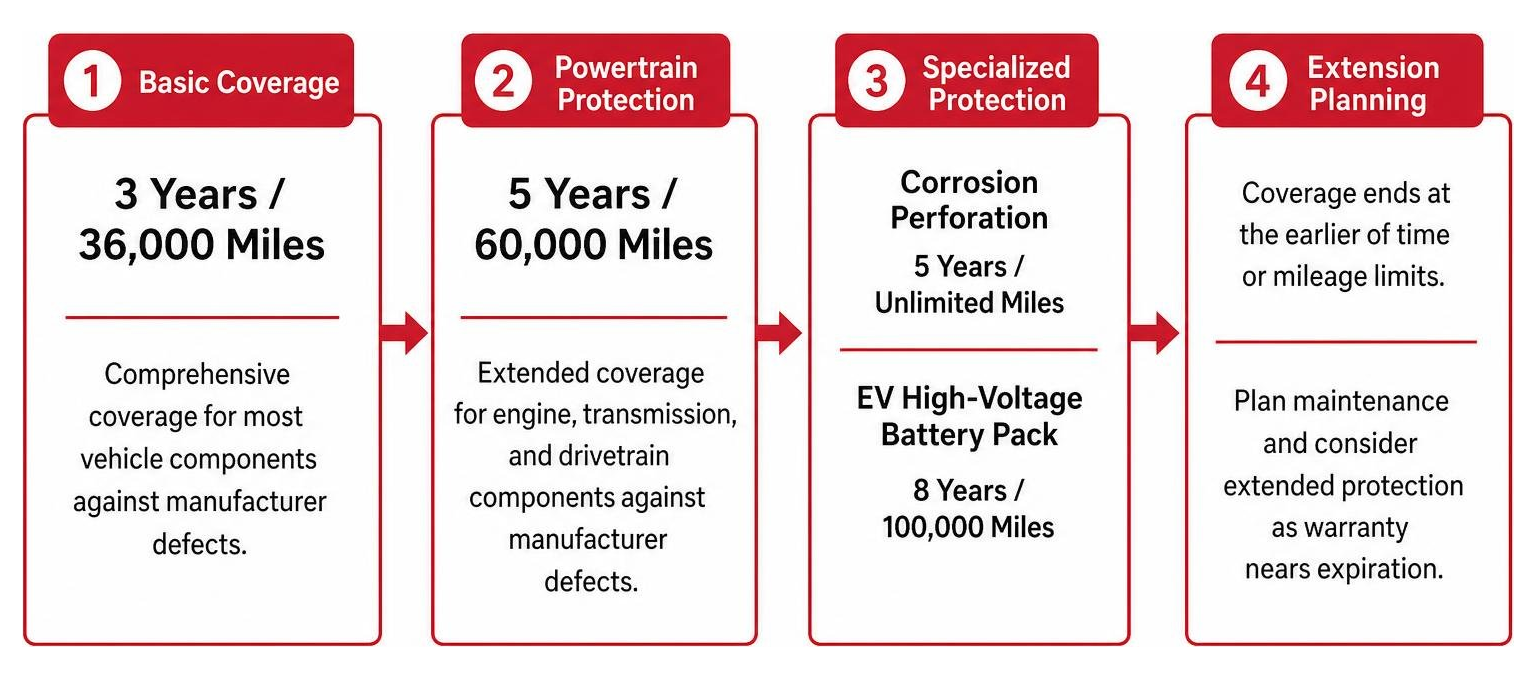
| Vehicle Classification | Basic Warranty Terms | Powertrain Warranty Terms | Corrosion Perforation |
|---|---|---|---|
| Standard Passenger Vehicles | 3 Years / 36,000 Miles | 5 Years / 60,000 Miles | 5 Years / Unlimited Miles |
| Electric Vehicles (Powertrain) | 3 Years / 36,000 Miles | 5 Years / 60,000 Miles | 5 Years / Unlimited Miles |
| EV High-Voltage Battery Pack | 8 Years / 100,000 Miles | 8 Years / 100,000 Miles | 5 Years / Unlimited Miles |
Commercial applications, such as daily rental fleets, taxi operations, delivery services, and full-time ridesharing, are subject to distinct operating rules and mileage terms outlined in the model-specific warranty booklet. Standard passenger coverage applies when you purchase the vehicle for personal, family, and household transportation.
The remaining balance of the factory powertrain warranty transfers automatically to subsequent owners if you sell the vehicle before reaching 5 years or 60,000 miles, requiring no transfer fee.
What to Keep for a Potential Warranty Claim
Keeping organized ownership records can make a warranty visit more straightforward. Save receipts or digital records for oil changes, fluid services, inspections, and other maintenance recommended in the owner's manual. Records should show the vehicle identification number when available, the date, the mileage, the work completed, and the shop that performed it.
If a warning message, unusual noise, shifting concern, or drivability issue appears, arrange service promptly rather than continuing to drive until the condition becomes worse. Do not attempt a repair yourself or clear diagnostic information before the vehicle is inspected. Nissan of Marietta's factory-trained technicians can document the concern, inspect the vehicle, and explain the next steps if a covered repair is needed.
Protecting Warranty Validity and Considering Additional Coverage
Preserving your warranty requires documenting that the vehicle receives required maintenance at manufacturer-specified intervals. Skipping engine oil changes or ignoring transmission service schedules can complicate warranty claim approvals if a component fails from fluid breakdown.
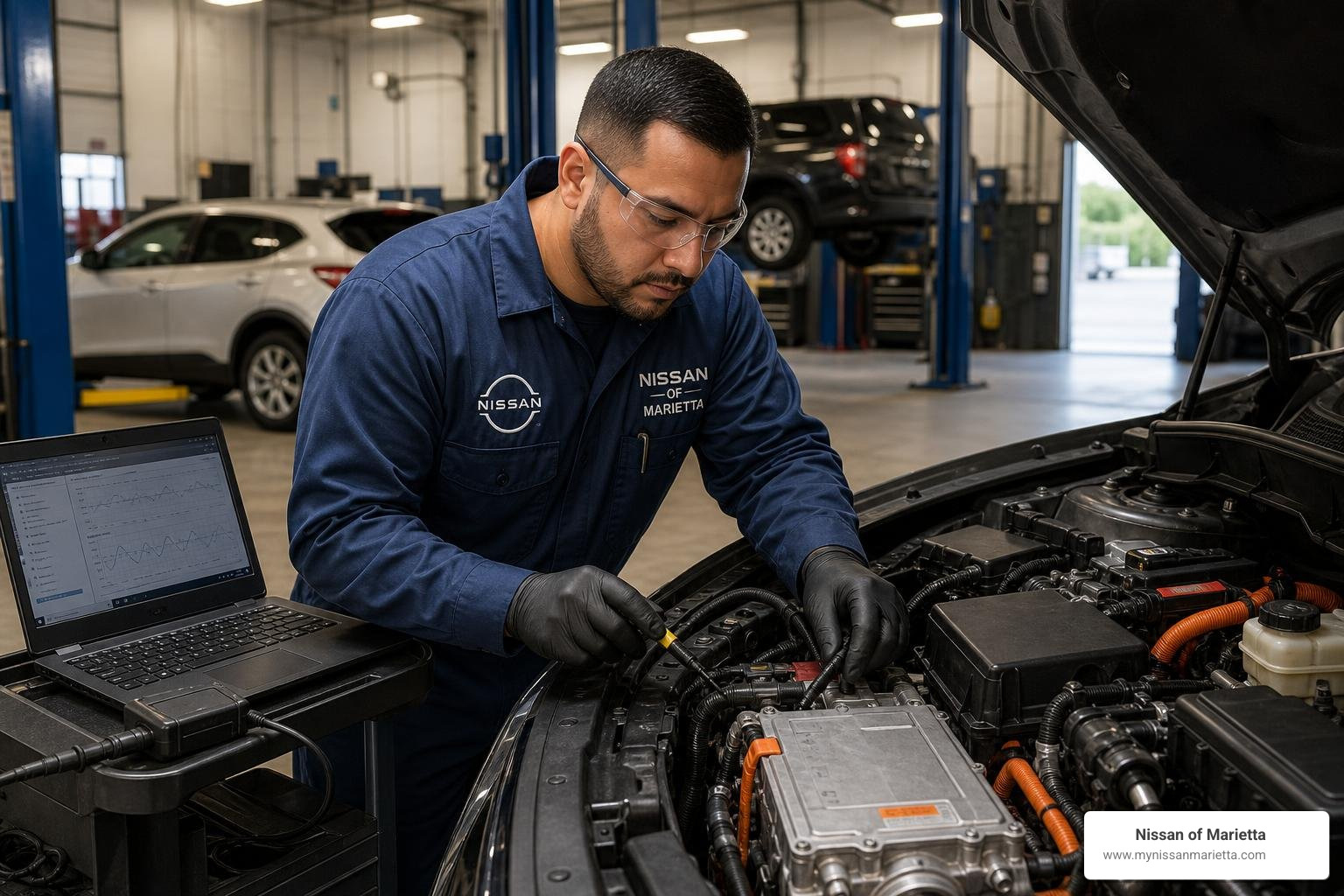
Always follow the maintenance schedule published in your model-specific owner's manual. When maintenance is due, you can schedule service with factory-trained technicians who record every visit accurately in the Nissan service database.
Genuine Nissan Parts and Accessories Protection
When maintaining or personalizing your vehicle, choosing OEM parts ensures precise fitment and protects factory performance. You can conveniently order parts directly from our dealership.
Genuine Nissan replacement parts and accessories installed by an authorized dealer at the time of purchase are covered for the remainder of the 3-year/36,000-mile basic warranty, or for 12 months/12,000 miles, whichever provides greater coverage. Parts purchased over the counter carry individual replacement part warranty terms. Always verify current parts coverage before submitting a claim.
Options for Coverage Beyond the Factory Warranty
If you plan to keep your vehicle past the 5-year or 60,000-mile mark, you can explore Nissan Security+Plus extended service plans. These dealer-backed agreements cover hundreds of electrical and mechanical components after factory coverage concludes.
Planning Before Factory Coverage Ends
As the 5-year or 60,000-mile limit approaches, it can be useful to schedule a professional inspection and discuss any concerns that have appeared during normal driving. Pay attention to warning lights, fluid leaks, harsh shifting, vibration, unusual engine noise, or changes in how the vehicle accelerates. These symptoms do not prove that a powertrain part is defective, but raising them before coverage expires gives a certified technician an opportunity to evaluate them.
This appointment is also a good time to review the maintenance history and ask which factory protections remain in effect for the vehicle. If you are considering an extended service plan, compare the plan terms, deductible, covered components, exclusions, transferability, and maintenance requirements before deciding. An extended service plan is separate from the factory warranty and should be evaluated based on how long you expect to keep the Nissan and the type of protection you want.
If you are shopping for a pre-owned vehicle, exploring our certified inventory provides added peace of mind. Nissan Certified pre-owned vehicles undergo a rigorous multi-point inspection and include a 7-year/100,000-mile limited powertrain warranty from the original in-service date, distinct from ordinary used vehicles or Certified Select models.
Frequently Asked Questions About Nissan Factory Warranties
Is the 5-year powertrain warranty transferable if I sell my car?
Yes. The factory 5-year or 60,000-mile powertrain warranty stays with the vehicle identification number (VIN). If you sell your car to a private buyer in Marietta, Smyrna, or anywhere in Georgia, the new owner receives the balance of the remaining time and mileage automatically.
How does commercial or rideshare driving affect my warranty coverage?
Using a personal vehicle for commercial fleet operations, delivery services, or intensive ridesharing may subject the vehicle to specific exclusions detailed in your warranty booklet. Check your warranty guide for exclusions related to commercial duty cycles.
What should I do before my 5-year factory warranty expires?
Before your vehicle reaches 5 years or 60,000 miles, schedule a comprehensive vehicle inspection with our certified technicians. Inspecting the engine, transmission, seals, and drivetrain allows you to address any warrantable concerns before your coverage period closes. You can check our service specials for seasonal maintenance savings before scheduling your visit.
Does the powertrain warranty cover routine maintenance?
No. Routine maintenance items and normal-wear parts are generally not covered by the powertrain warranty. Examples can include oil changes, filters, brake components, wiper blades, tires, and fluids replaced as part of regular service. Follow the maintenance schedule for your specific Nissan model and keep service records for future reference.
What information should I bring to a warranty service visit?
Bring the vehicle, the current mileage, maintenance receipts when available, and a clear description of the concern, including when it occurs. The Service Department can use the vehicle identification number to confirm the applicable warranty booklet and inspect the issue. Warranty eligibility depends on the diagnosed condition, covered component, vehicle age and mileage, and any relevant exclusions.
Conclusion
Understanding your factory coverage helps you make smart ownership decisions, budget accurately, and keep your vehicle running smoothly. Whether you are commuting along Cobb Parkway, carpooling to school sports in Kennesaw, or planning weekend trips across Georgia, your powertrain warranty provides essential protection for your vehicle's core systems.
When you evaluate a vehicle's purchase price, consider how financing, trade equity, and long-term maintenance costs work together over your full ownership timeline. A lower monthly payment does not necessarily mean lower total ownership costs if maintenance is neglected. Nissan of Marietta offers competitively priced inventory and works with many banks specializing in diverse financing situations to provide flexible purchasing options.
If you have questions about your warranty status, want to evaluate protection options, or need factory-certified maintenance, contact us today. Our team at Nissan of Marietta is here to support you throughout your ownership journey.