Don't Get Stranded: The Complete Nissan Car Battery Breakdown
Nissan Car Battery Basics: What Every Driver Should Know
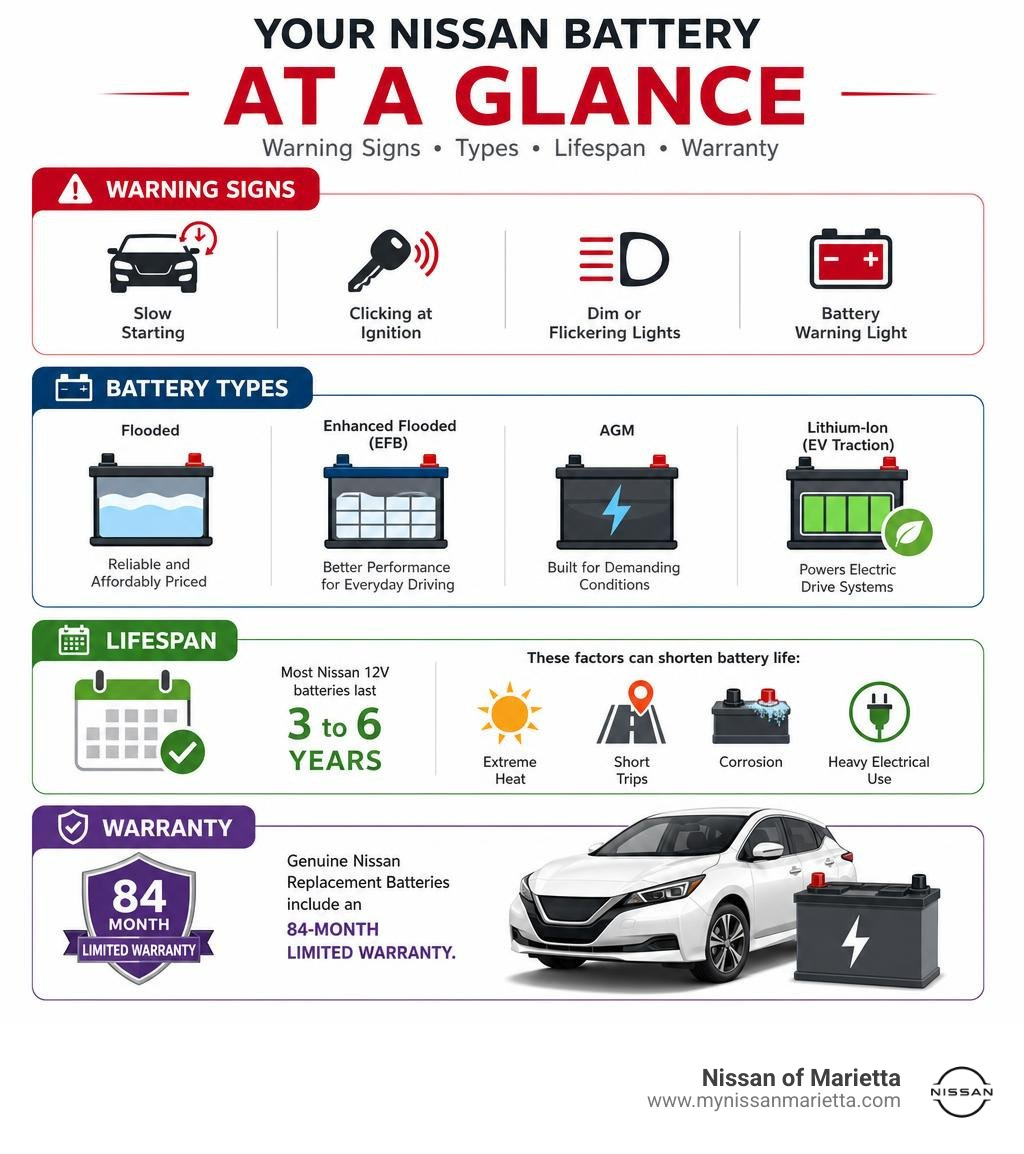
A nissan car battery supplies the 12-volt power needed to start a gas-powered Nissan and run key electronics in every model, including the Nissan LEAF. Most 12V batteries last about 3 to 6 years, but Georgia heat, short trips, corrosion, and heavy electrical use can shorten that timeline.
Here is the quick answer:
| What to know | Quick detail |
|---|---|
| Common warning signs | Slow starting, clicking at ignition, dim or flickering lights, and a battery warning light |
| Main battery types | Flooded, enhanced flooded (EFB), AGM, and lithium-ion traction batteries in EVs |
| Typical 12V replacement cost | About $45 to $250 for the battery alone; OEM options and installation can cost more |
| Nissan LEAF battery setup | The LEAF has both a high-voltage drive battery and a separate 12V auxiliary battery |
| Genuine Nissan warranty | Genuine Nissan Replacement Batteries include an 84-month limited warranty |
A weak battery rarely fails at a convenient time. Knowing its age, its warning signs, and the correct replacement type can help Cobb County drivers avoid an unexpected no-start at home, at school drop-off, or before a weekend trip. This guide explains the essentials without the guesswork.
Warning Signs You Need a New Nissan Car Battery
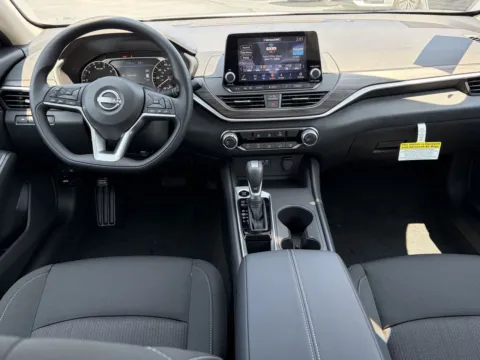
Your Nissan vehicle usually provides distinct physical and visual indicators before its battery succumbs completely. Paying close attention to these warning signs saves you from the frustration of being stranded in a parking lot or driveway.
One of the most obvious indicators is slow engine cranking. When you turn the ignition or press the push-button start on your Nissan Altima, Rogue, or Frontier, the engine may turn over sluggishly, taking several seconds longer than usual to catch. In more severe cases, you will hear a rapid clicking sound coming from under the hood. This occurs when the starter solenoid engages but the nissan car battery lacks the necessary amperage to turn the flywheel.
Electrical anomalies across your cabin and exterior lighting also point directly to voltage instability:
- Dim or Flickering Headlights: Exterior illumination may look noticeably duller, or lights might dim further when idling at a stoplight or running the air conditioner.
- Flashing Interior and Instrument Panel Displays: Main digital screens, climate controls, or driver information displays may flicker or reset unexpectedly during startup.
- Dashboard Warning Light: A red illuminated battery icon on your driver info gauge indicates a drop in overall system charge or an alternator output irregularity.
- Sluggish Power Accessories: Power windows operating slower than normal, delayed power seat adjustments, or erratic power tailgate operation.
A standard automotive lead-acid battery operates using chemical reactions across internal lead plates submerged in liquid electrolyte solution. A key threshold to keep in mind is the 50% depth-of-discharge rule: a typical 12V car battery cannot handle being drained past 50% capacity repeatedly without suffering irreversible sulfation and permanent plate hardening. Once deep discharge cycles begin occurring, the unit will lose its ability to retain peak charge, leaving you vulnerable to sudden startup failure.
Types of Batteries Available for Nissan Vehicles
Choosing the Right Nissan Car Battery Type
Selecting the proper chemistry and group size ensures your electrical system delivers dependable performance across changing weather conditions. Nissan designs its engines and onboard computer modules around specific electrical load parameters, making it essential to match replacement units to original equipment manufacturer (OEM) standards.
There are three primary 12V lead-acid battery designs commonly used in standard passenger vehicles:
- Standard Flooded Batteries: Traditional lead-acid chemistry utilizing liquid electrolyte. These represent an economical baseline for older vehicles with basic electrical accessory demands.
- Enhanced Flooded Batteries (EFB): An upgraded variation featuring internal polyester scrim materials that hold active plate material in place. EFBs handle higher charge acceptance and cycling capacity, making them standard equipment on modern vehicles like the 2020 Nissan Rogue Sport (which used a Group Size 47/H5 OEM battery).
- Absorbed Glass-Mat (AGM) Batteries: Advanced construction where electrolyte is entirely absorbed into ultra-fine fiberglass mat separators. AGM designs are spillproof, highly resistant to severe road vibration, and charge up to five times faster than traditional flooded types. Nissan strongly recommends replacing original factory batteries with an EFB or an even more resilient AGM battery to handle advanced onboard electronics and automatic engine start-stop features.
When shopping for replacement units, pay close attention to critical capacity ratings including Cold Cranking Amps (CCA), which measures the current delivered at 0°F for 30 seconds while maintaining at least 7.2 volts, and Reserve Capacity (RC), which indicates how many minutes the unit can supply essential accessories if the alternator fails.
| Battery Type | Cycling Resistance | Vibration Resistance | Recommended Use Case |
|---|---|---|---|
| Standard Flooded | Moderate | Standard | Older Nissan models, basic electrical loads |
| Enhanced Flooded (EFB) | High | Superior | Vehicles with auto start-stop, moderate accessories |
| Absorbed Glass-Mat (AGM) | Exceptional | Maximum | High electrical loads, extreme climates, start-stop systems |
For precise fitment, genuine OEM choices include the Group H5 Genuine Nissan Battery Specs (Part Number 999M1-NCH5C), which delivers 550 Cold Cranking Amps and 105 minutes of Reserve Capacity, ideal for many Nissan Frontier, Murano, Pathfinder, and Rogue crossovers. For larger demands, the Group H6 Genuine Nissan Battery Specs (Part Number 999M1-NCH6A) provides 720 Cold Cranking Amps and 120 minutes of Reserve Capacity for vehicles like the Titan, Sentra, or Rogue.
EV 12V Auxiliary Batteries vs Gas Engine Systems
Many drivers are surprised to learn that 100% electric vehicles, such as the iconic Nissan LEAF, still rely on a standard 12-volt auxiliary battery alongside their large high-voltage lithium-ion traction pack.
The primary job of the 12V battery in an electric vehicle is to energize the vehicle’s central computers, power anti-lock brakes, operate lighting, and close high-voltage relays (contactors) that connect the main drive pack when you press the power button. If the 12V battery in a LEAF drops below 12.0 volts, the onboard system logic will fail to boot up, triggering dashboard error warnings and leaving the car immobilized even if the high-voltage traction battery is fully charged!
Unlike internal combustion engines that rely on an engine-driven alternator to supply power while driving, electric models utilize a solid-state DC-DC converter to step down power from the high-voltage traction pack to keep the 12V system charged. However, the conservative DC-DC charging routine on early electric models sometimes leaves standard 12V flooded lead-acid batteries undercharged, prompting many EV enthusiasts to explore upgraded AGM or specialized lithium options.
For additional details regarding main traction drive assemblies and capacity, review official Nissan EV Battery Disclosure Information or join practical discussions across the owner community regarding Nissan Leaf 12V Battery Upgrade Discussions. You can also check out our selection of eco-conscious transport when you Learn more about fuel efficient vehicles available at our Marietta showroom.
Cost, Lifespan, and Warranty for Genuine Nissan Batteries
Battery Lifespan Factors and Premature Failure Causes
While a high-quality nissan car battery lasts an average of 3 to 6 years, real-world driving habits and environmental exposure dictate its true service life. Extreme ambient temperatures represent the single greatest threat to battery longevity.
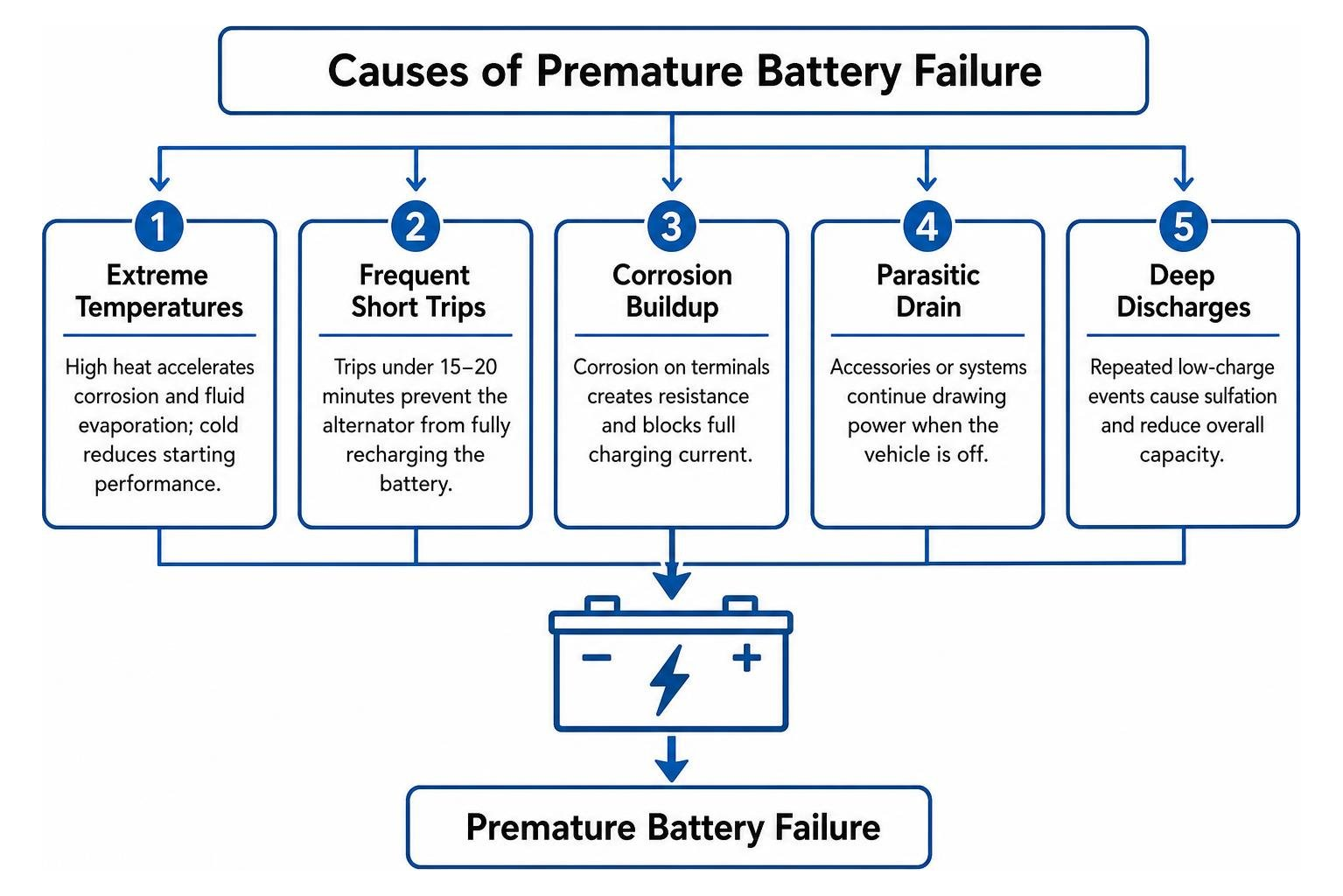
High summer heat in Georgia accelerates internal grid corrosion and causes fluid evaporation inside flooded cells. Although heat does the underlying damage during hot months, the failure often manifests during winter when cold temperatures increase crank resistance and lower chemical output.
Other common failure causes include:
- Frequent Short Trips: Driving less than 15 to 20 minutes continuously prevents the alternator from fully replenishing charge consumed during engine startup.
- Corrosion Accumulation: Lead-sulfate corrosion on battery posts creates electrical resistance, preventing full charging current from reaching the grid.
- Vibration Damage: Loose hold-down clamps allow internal plates to shake, crack, or short-circuit over rough roads.
- Excessive Accessory Loads: Aftermarket amplifiers, radar detectors, dash cams, and leaving cabin lights on overnight drain voltage below safe retention thresholds.
To keep your vehicle running smoothly year-round, Read maintenance tips on our blog.
Replacement Costs and OEM Warranty Coverage
Understanding replacement costs helps you budget effectively when maintenance is due. Standard retail prices for aftermarket 12V replacement batteries generally range from about $45 to $250 depending on chemistry, group sizing, cold cranking amps, and brand quality. High-end AGM options and direct OEM replacements usually sit between $170 and $265.
By contrast, high-voltage main hybrid battery replacement assemblies for electrified models (such as Pathfinder Hybrid or Rogue Hybrid systems) represent complex powertrain components costing between $6,000 and $6,900.
Choosing genuine factory equipment protects your investment with outstanding warranty terms. Genuine Nissan Replacement 12V Batteries come equipped with an impressive 84-month (7-year) limited warranty, offering peace of mind and broad service coverage through authorized dealerships nationwide.
For electric vehicles, Nissan provides dedicated high-voltage protection. The Nissan lithium-ion battery warranty covers defects in materials or workmanship for 96 months or 100,000 miles (whichever occurs first). Furthermore, this coverage protects owners against capacity loss below 9 segments out of 12 as shown on the vehicle’s digital capacity gauge over that same 96-month/100,000-mile window.
When you need authentic components engineered to exact manufacturer tolerances, easily Order Genuine Nissan Parts directly through our team.
How to Replace and Maintain Your Nissan Car Battery
Step-by-Step DIY Nissan Car Battery Replacement
Replacing a 12V battery at home is a manageable project if you follow the correct sequence and wear safety gear, including protective gloves and eye protection.
Before starting, gather necessary hand tools:
- 10mm socket wrench with a ratchet extension (or standard 10mm box wrench)
- Flathead screwdriver or trim pop-rivet removal tool
- Battery post terminal cleaner wire brush
- Anti-corrosion washer pads and terminal grease
Follow this step-by-step installation flow:
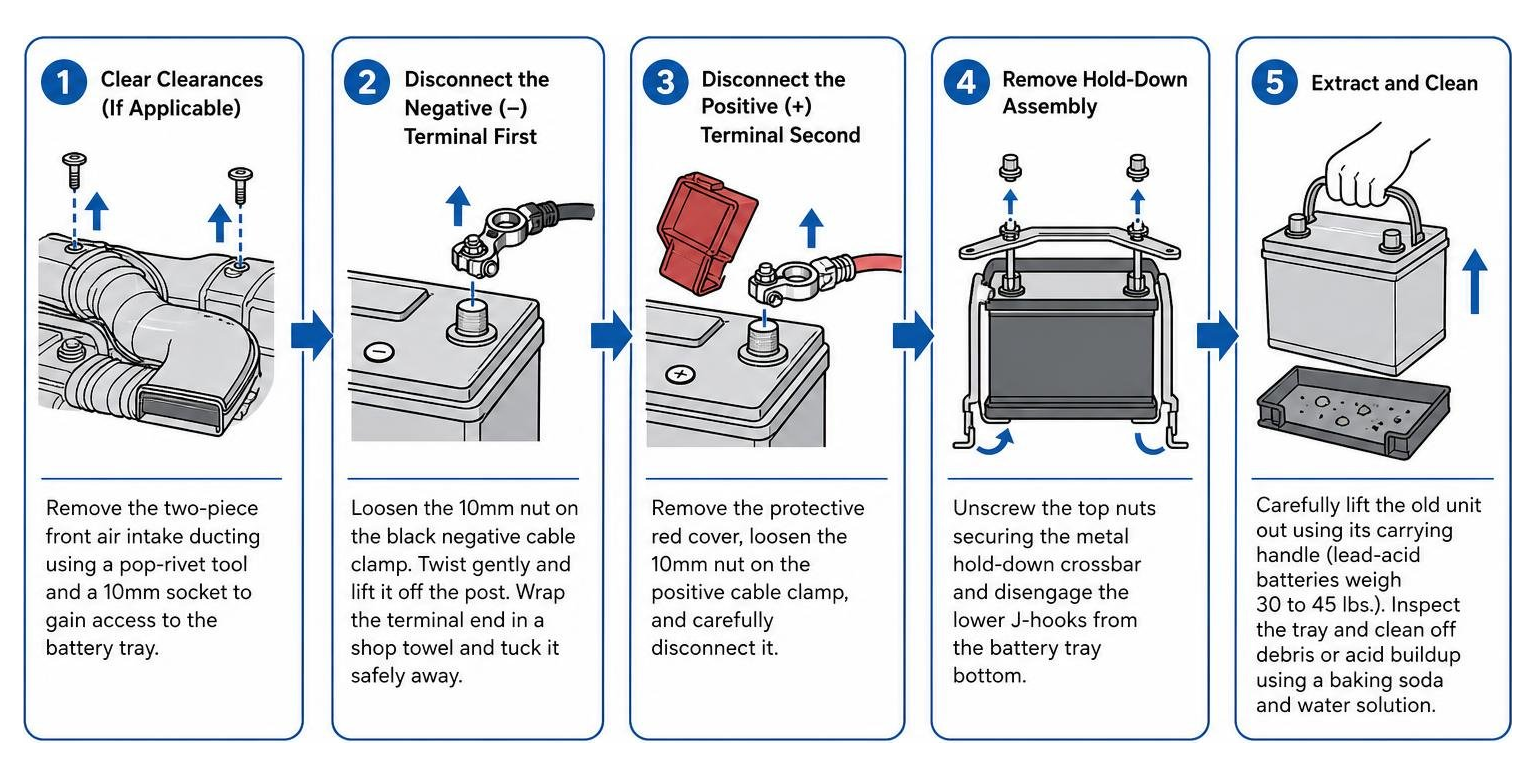
- Clear Clearances (If Applicable): On specific models like the second-generation Nissan Rogue Sport or Qashqai equipped with the 2.0L MR20DD engine, remove the two-piece front air intake ducting using a pop-rivet tool and a 10mm socket to gain clear physical access to the battery tray.
- Disconnect the Negative (-) Terminal First: Loosen the 10mm nut on the black negative cable clamp. Twist gently and lift it off the post. Wrap the terminal end in a shop towel and tuck it safely away from the battery to prevent short circuits.
- Disconnect the Positive (+) Terminal Second: Remove the protective red cover, loosen the 10mm nut on the positive cable clamp, and carefully disconnect it.
- Remove Hold-Down Assembly: Unscrew the top nuts securing the metal hold-down crossbar and disengage the lower J-hooks from the battery tray bottom.
- Extract and Clean: Carefully lift the old unit out using its carrying handle (note: lead-acid batteries weigh 30 to 45 lbs). Inspect the plastic tray and clean off debris or acid buildup using a baking soda and water solution.
- Install New Unit: Place the fresh nissan car battery into the tray, ensuring terminal posts match original orientation (positive post closest to red cable). Transfer any thermal insulation sleeve or heat shield from the old unit onto the new housing.
- Secure and Reconnect: Reattach the hold-down bracket and tighten nuts until snug (do not over-torque). Clean the cable clamps, place anti-corrosion washers over posts, apply terminal protector grease, and reconnect cables in REVERSE order: attach the positive (+) terminal first, followed by the negative (-) terminal last.
For a detailed visual guide covering intake removal and bracket clearances, consult the Nissan DIY Battery Replacement Guide.
Preventative Maintenance and Diagnostic Testing
Modern automotive batteries are largely maintenance-free, meaning you no longer need to top off liquid water levels inside sealed cases. However, simple routine checks extend electrical reliability and prevent unexpected starting failures:
- Keep cable terminals clean, tight, and free of blue or white powder corrosion.
- Check that the hold-down bracket remains securely fastened to prevent internal cell damage from road vibration.
- Test your alternator output during routine engine oil change appointments to confirm it is delivering steady charging voltage between 13.8 and 14.5 volts.
If you suspect your electrical system is weakening, don't hesitate to Contact our service team or check out available savings when you Explore high mileage service offers for long-term ownership care.
Frequently Asked Questions About Nissan Batteries
Do I need to recharge my battery after a jump-start?
In most cases, standard driving for 20 to 30 minutes at highway speeds allows the alternator to replenish electrical energy consumed during a jump-start. However, if the unit was deep-drained below 50% capacity or has suffered internal cell damage, the alternator alone may not fully restore state-of-charge health. If your vehicle fails to start again after driving post-jumpstart, bring it to a professional technician for electrical testing.
Can I upgrade my Nissan battery to an AGM or Lithium-Ion type?
Yes, upgrading from a standard flooded battery to an Absorbed Glass Mat (AGM) battery is an excellent option for Nissan vehicles. AGM batteries offer spillproof construction, outstanding vibration resistance, and faster charge acceptance, making them particularly helpful for models with heavy electrical demands or automatic start-stop technology.
If you own an electric vehicle like the Nissan LEAF, 12V lithium-ion (LiFePO4) replacement batteries are also available on the market. However, drivers living in colder regional climates should keep in mind that unheated 12V lithium batteries cannot safely accept charging currents at or below freezing temperatures (32°F / 0°C) unless equipped with an integrated internal heating element.
Where can I get a free battery test for my Nissan?
You can receive a complimentary battery diagnostic test at authorized dealership service centers, including Nissan of Marietta. Professional battery testing uses digital conductance technology to accurately evaluate Cold Cranking Amps, internal cell resistance, and overall state of health within minutes—well before a total charge failure leaves you stranded.
Conclusion
Staying on top of your nissan car battery health is one of the easiest ways to ensure every commute across Marietta, Atlanta, and Cobb County remains smooth and worry-free. Recognizing early failure symptoms—like slow cranking or dim interior lights—allows you to replace aging equipment on your own schedule rather than waiting for an emergency.
At Nissan of Marietta, our factory-trained technicians are here to help keep your vehicle performing at its peak. Whether you need a quick complimentary diagnostic test, an OEM-certified replacement battery backed by an 84-month warranty, or routine scheduled maintenance, we provide fast, transparent service tailored to your vehicle. View our current service specials today and schedule your next visit with our friendly team!